top of page

Revolution Against Evolution

A Revolution of the Love of God
The Puzzle of Mixotricha Paradoxa

The Ghost Town of Summitville, Michigan

Periodic Table Patterns in the Bible?

Biosynthesis of Chlorophyll and Hemoglobin

Creation Geology Explained

Best Sellers

Discover the truth about the world we live in with our best-selling  books that cater to the curious minds of science, history, and theology enthusiasts.

Cover of the book Revolution Against Evolution
Cover of the book Don't Let Geology Mess Up Your Theology
Cover of the book Dr Hale's Remedies
Spiritual Guidance & Testimonies

Expand your library with the experience of others, and learn about the love of God through our collection of personal testimonies and spiritual guidance.

Cover of the book A Child Changes a Life
Cover of the book Transformed by the Evidence

Online Book Store

Explore our e-commerce section offering a unique collection of historic books. From ancient civilizations to modern discoveries, find a treasure trove of knowledge.

Latest Videos

The Puzzle of Mixotricha Paradoxa
30:00
The Puzzle of Mixotricha Paradoxa
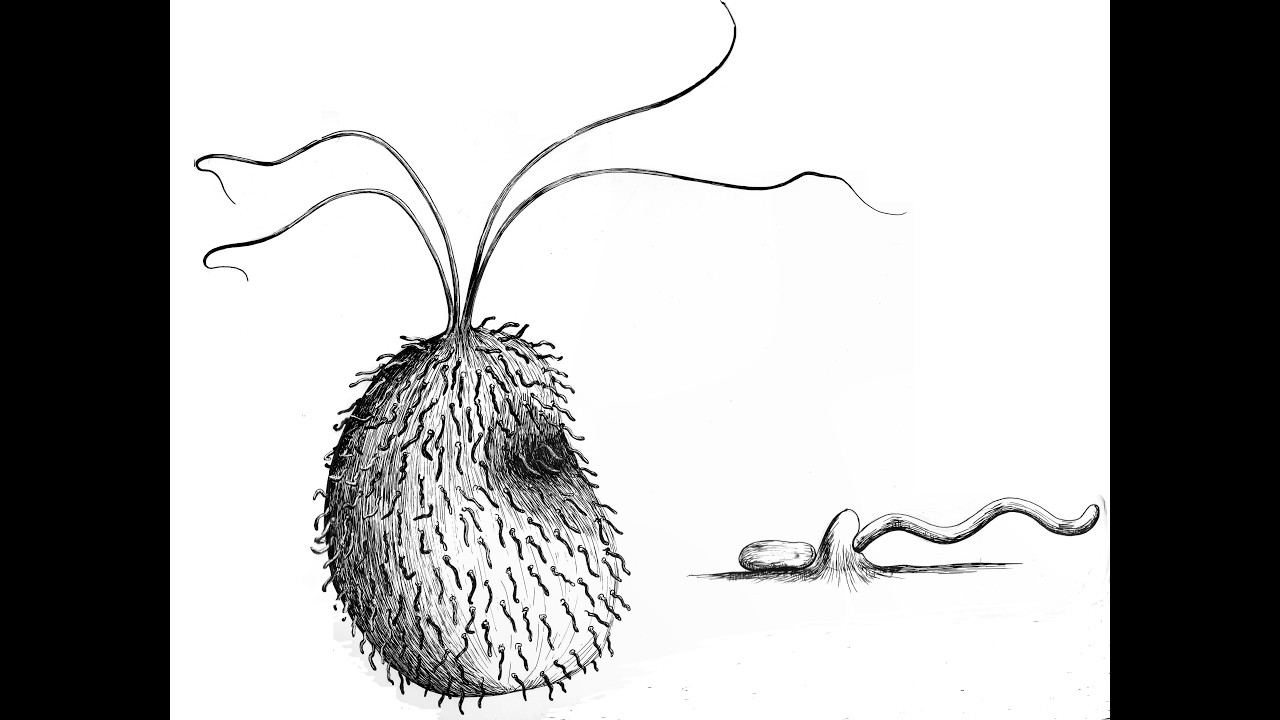
A curiosity I studied in my microbiology class many years ago, Mixotricha Paradoxa represents a case of a microorganism that is made up of a symbiosis of several unrelated types of bacteria. This organism lives in the gut of the Australian termite Mastotermes darwiniensis. This is a giant termite that is only found in northern Australia. According to the Wikipedia article, this is the most "primitive" extant termite species. ("Primitive" is only in the minds of evolutionists). This species does not form mounds but builds nests underground in a complex network of tunnels and galleries which they use to travel to new food sites. It is the only living member of its genus and family. Apparently, evolutionists find it difficult to classify, as they found similarities to cockroaches, with a similar abdomen. In Northern Australia, this organism is a major pest to the point where vegetable farming has been virtually abandoned wherever this termite is abundant. https://en.wikipedia.org/wiki/Mastotermes_darwiniensis Mixotricha Paradoxa lives in the gut of this pest, and for that reason it has been studied. The name was given by the Australian biologist J. L. Sutherland, who first described it in 1933. The name means "the paradoxical being with mixed up hairs". This large protist has both cilia and flagella, which before this discovery was not thought to be possible. It forms a mutualistic relationship with five different kinds of bacteria living inside the termite. There is a total of four bacterial symbiont species. Inside the cell, there is a spherical bacterium that has the same function as mitochondria, which Mixotricha lacks. The article claims that the Mixotricha mitochondria degenerated and lost the ability to produce energy aerobically. That begs the question, as we have no idea from what we find in the present what the evolutionary precursor might have looked like. The Mixotricha has four flagella at one end that serve as rudders, three pointing forward and one backwards. There are brackets that hold thousands of spirochetes that provide locomotion. Each bracket holds one spirochete and one bacillus. It is not definite, but it is believed that basal bodies could be making cellulases that digest wood. About 250,000 hairlike Treponema spirochaetes, a species of helical bacteria, are attached to the cell surface and provide the organism with cilia like movements. The flagella provide the steering. The motion of the spirochetes is in sync with each other, suggesting that they are somehow in touch with each other. Mixotricha have five genomes, as they form very close symbiotic relationships with four types of bacteria. The question is if these genomes evolved separately and came together. Evolutionists really are not looking for an explanation involving a master designer who coordinates symbiosis. They look for common features and misinterpret them as being from common descent. I recognized immediately the significance of the impossibility of five different synchronizing genomes to make up this organism when I took this microbiology class. It is obvious that this is a product of a Creator God who design these creatures to work in harmony. The question why this termite is a "pest" and why God would create this is not that weighty to answer. God designed certain creatures to be decomposers to consume dead plant life and turn it into soil. It is only a "pest" in terms of how man wants to cultivate agriculture, and if the environment is out of balance, one creature can be become destructive.
The Ghost Town of Summitville, Michigan
29:01
The Ghost Town of Summitville, Michigan
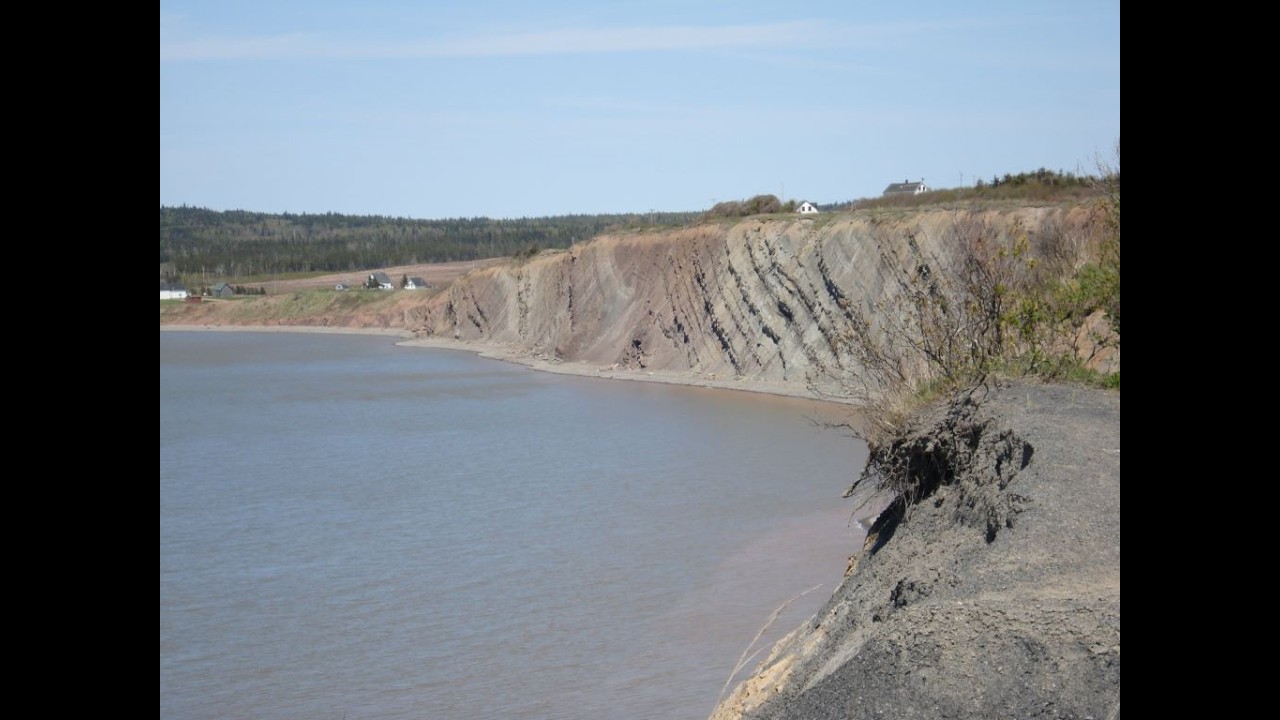
This is a discussion of the value of forensic science versus empirical science taken from Michigan history, my family history and how it applies to the creation-evolution question. I found an old ledger in a trunk of books in my grandmother’s attic that came from an old house in Lewiston Michigan that my family owned. It had been left to my grandmother and her sister by her uncle Elmer Thompson. The house is no longer there, but the property is on the grounds of the museum at the Lewiston Historical Society, where we help support. They have a Timber Fest every August. This year it is on August 7-8. There were about 30 books in the old trunk, dating from that time up through the early 1900’s. One of them was an original edition of Longfellow’s Wayside Inn published in 1863. Another was an old remedy and recipe book written by a doctor between 1844 and 1863. The object of our discussion today, though, is this old ledger from the town of Summitville that had entries dated from 1839 to 1859 and drawings, newspaper clippings, and poetry dating about 1872. Now here is where we discuss Forensic Science. We are going to gather clues about Edward Randall and his grandfather Samuel G. Randall. As you can see, there was not much evidence we could obtain from digging around the remains of Summitville. But we did find the graves of Samuel G. Randall and Edwin Randall in the Cherry Valley cemetery nearby. We were shocked to find that Edwin Randall didn’t live that long. He died at 18 years old. But if you read his poetry, you can find out that he wrote from the depths of his soul. His poem about the Indian’s Adieu speaks of the agony of the trail of tears, and of his Christian faith. He was a hopeless romantic, as you can see from his Dreamland and Dreams of Youth poems. He wrote about his loneliness after his mother’s death. He also wrote about the grief of being estranged from his girlfriend. We have no clue why he died so early. He was the brother of Minnie Randall, my great-grandmother’s cousin, who was married to Elmer Thompson, my grandmother’s uncle, who owned the Lewiston house. Edward Randall’s artwork was masterful and gives clues about life in Summitville. We find Summitville mentioned in old letters and Brookside, another ghost town near Reed City. It is likely he worked for Jay Bronson, who had an office in Detroit and in Big Rapids. There was an invitation to a social dance at the Chase Hotel. There was a letter written by his aunt Elizabeth Zollinger, whose daughter Gulielma published several books, and whose name was in several of the books in the trunk. There was an old newspaper in the ledger dated October 13, 1830. It was the Norwich Journal from New York, and it had the signature of Green Randall on it, who was Samuel G. Randall’s father. Researching this on Ancestry, the Randall family figured prominently in the founding of Norwich, New York, and this newspaper gives a snippet of history of that time. There was an article about the politics of the time. Andrew Jackson was president and there was a political party called the Anti-masonry Party led by Henry Clay opposing him. There was also an article about the execution of John Knapp, a famous case where two brothers arranged the murder of their father. Daniel Webster argued the case and established a precedent that arranging a murder through a hitman doesn’t shield one from prosecution of that murder. Ancestry.com also reveals that Green Randall had quite a family with 11 siblings. His father Arunah Randall came from New London, Connecticut, as well as his grandfather Benjamin Randall. His great grandfather John Randall was born in Westerly, Rhode Island. John Randall was born in 1666. He would have been my seventh great grandfather. My great-great grandfather John Randall could have been named for him. We have his photograph. I don’t know much about him except my grandmother Thelma Sharp spoke about him, and I have some photographs of her as a little girl with her sister next to him. He was divorced and we don’t know exactly where he ended up or what happened. Apparently, from death records on Ancestry. he died in 1910 in Paris, Michigan near Big Rapids. Ultimately, forensic science depends upon written records from people who were there. The only details we know are what they recorded. Empirical science deals with experimental science using evidence found in the present and truth is established by repeating experiments. We can’t do that with forensic science, and the picture we get from fragments of the past left to us by our ancestors is partial. We must not make up speculations beyond what we are told. That is why we must rely upon the Bible as the forensic evidence from people who wrote down what happened.
Contested Bones with Dr. John Sanford
58:30
Contested Bones with Dr. John Sanford
One of the biggest reasons people give why they believe in evolution are the evidence from fossil man. Dr. John Sanford takes on this problem in his new book Contested Bones. He shows that the fossils purported to be ape-men are either inbred degenerative humans, mixtures of ape and human bones, or extinct apes.
Periodic Table Patterns in the Bible?
01:00:01
Periodic Table Patterns in the Bible?
Could numerical structures in the Bible correspond to the ordering of the chemical elements? In this recorded lecture from the West Michigan Creation Fellowship, researcher Derek Marshall explores three biblical structures that appear to align with the numerical order of the periodic table under specific constraints. The presentation examines: The Creation Function - a spiral mathematical model derived from harmonic-series growth that produces periodic table structure. The Daniel Image - a constrained numerical interpretation of the metal statue and its dimensions described in Daniel 2 and 3. Solomon’s Molten Sea - a geometric architectural model that mirrors orbital capacities of the periodic table. Using statistical methods, including Monte Carlo null testing, the talk investigates whether these correspondences arise by coincidence or reflect deeper numerical order.

Got Questions?

Every wondered why you thought 'that doesn't make sense' the first time Darwinian Evolution was explained to you? Ever thought that new evidence seemed contradictory or had an instinctive feeling there's a different answer to the one you're being given?  Don't worry you're not alone.  As a qualified scientist Doug Sharp and his associates have spent most of their lives wondering the same things.  Over the last 25 years Revolution Against Evolution has amassed a sizeable catalog of articles, videos, and other resources to help you learn more about creationist perspectives.

Resources

Essays Archive

Search our database to access hundreds of articles written by highly qualified researchers and scientists

Dynamic FAQ

Search the database by using our Dynamic FAQ page.  Here you'll find videos, essays and PDFs to help you find out more.

Support Our Ministry

Get in Touch

Questions?  Suggestions?  We’d love to hear from you!

Complete the form below and we will contact you as soon as possible.

Be sure to tell us if you prefer to be contacted by e-mail or telephone.

Contact us

Revolution Against Evolution

A Revolution of the Love of God

Web design by CeriumSoft

© 2026 rae.org. Created on Wix Studio.

bottom of page